

By Maxwell Guma
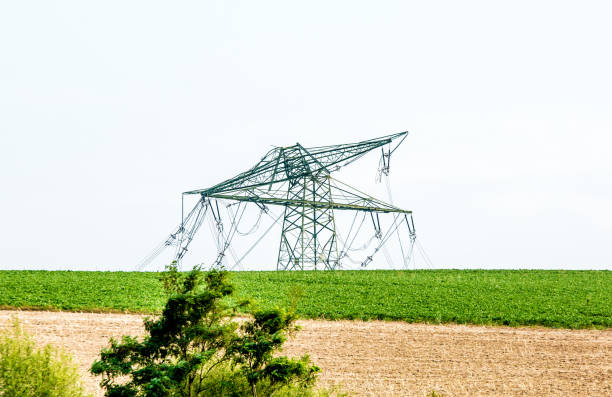
Residents, students and business owners in Keffi, Nasarawa State, are grappling with prolonged power outage following the collapse of three transmission towers along the Karu-Keffi-Akwanga 132kV transmission line corridor on Wednesday, October 7, 2026.
The blackout has increased the cost of charging electronic devices, disrupted small businesses and made studying difficult for students preparing for examinations.
The Transmission Company of Nigeria (TCN) said the incident occurred at about 4:06 p.m. during rainfall and windy conditions, affecting transmission infrastructure serving Keffi and Akwanga.
According to the company, the transmission line tripped on over-current relay protection before investigations revealed that towers T78, T79 and T80 had collapsed. The damage left the outgoing 33kV feeders at the Keffi and Akwanga transmission substations unavailable.
Explaining the technical implications, a staff of the defunct NEPA, Mr. Paul Danjuma, said the 132kV transmission line supplies electricity to transmission substations, which in turn distribute power through lower-voltage feeders.
He explained that the collapse of the towers required the affected transmission line to be isolated for safety reasons, thereby disrupting supply to customers connected to the affected substations.
TCN said its engineers are assessing the extent of damage and determining the materials required to commence restoration work. The company apologized to affected customers and promised to provide updates as restoration progresses.
However, the disruption has continued to create hardship for residents, particularly those who depend on electricity to charge their phones and other devices.
At Agwan Lambu, a resident, Jibril Abubakar, said the outage had increased pressure on the few available phone charging centres.
He said the cost of charging power banks had risen from N300 to N500, while phone charging fees had also increased.
“Sometimes, even when you have the money, you still cannot find space to charge your gadgets. Everywhere is filled up,” Abubakar lamented.
He appealed for prompt restoration of electricity, saying residents were struggling to cope.
The situation has also raised concerns about the safety of devices at overcrowded charging centres.
On October 12, 2026, a social media influencer, Barrister Aisha Abubakar Ramalan, posted on Facebook that more than 10 students lost their phones at a charging centre due to congestion.
“Today, more than 10 students lost their phones in a charging centre,” she wrote.
The circumstances surrounding the reported losses could not be independently verified.
Small business owners have also reported declining sales.
At Agwan Lambu Market, a cold-drink seller, Mr. Chima Oganiru Onubiyi, said the lack of electricity had affected his ability to chill drinks, thereby reducing customer patronage.
He said he previously sold at least 15 bags of sachet water daily but now struggles to sell five bags.
The outage has also disrupted students’ academic activities as examinations approach.
Adachukwu Eze, a student living in a hostel in Keffi, said the lack of electricity had made night reading difficult.
She explained that students usually depend on electricity on campus to study at night, making the blackout a major distraction.
Eze appealed for urgent restoration of power, saying the situation is affecting students at a critical period.
The collapse of the three transmission towers has therefore affected more than household supply. For residents, it has increased the cost of charging devices; for traders, it has disrupted sales; and for students, it has complicated examination preparations.
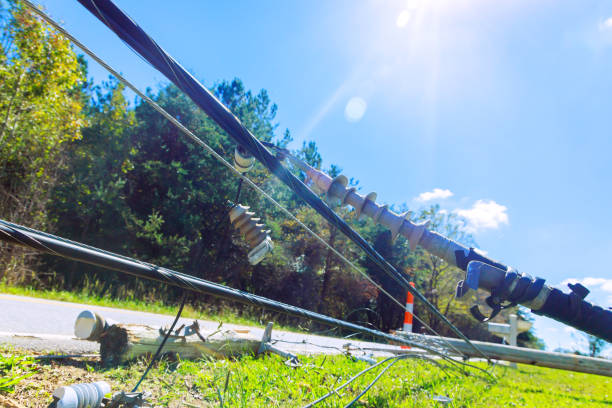
As affected communities await restoration, residents have called for swift intervention and return of reliable electricity supply.
