

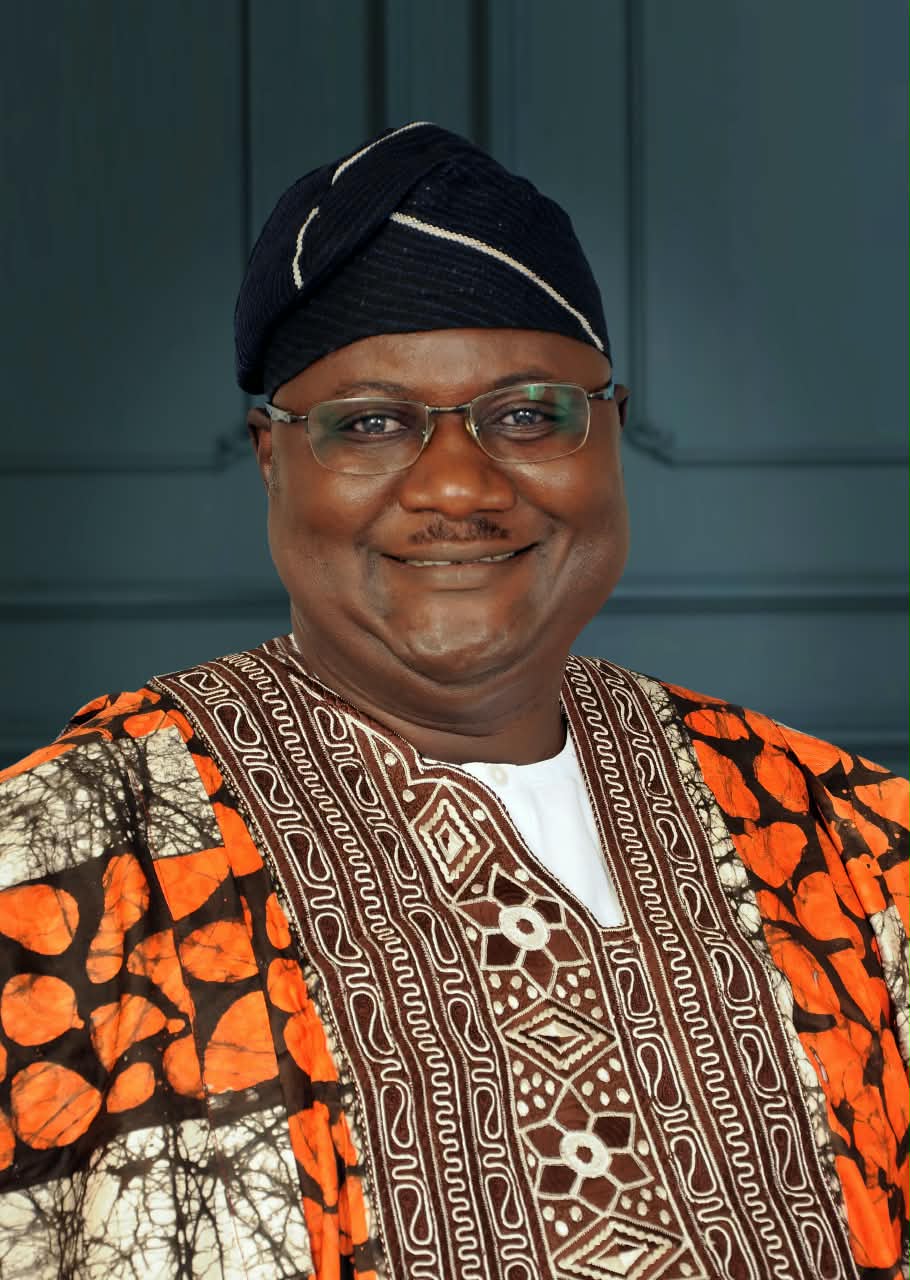
By John Wada Lafia
 Engineer Akaba Joshua Peter has declared that the House of Representatives seat for Lafia/Obi Federal Constituency must shift to Obi Local Government Area in the January 16 election, saying 43 years of marginalization is enough.
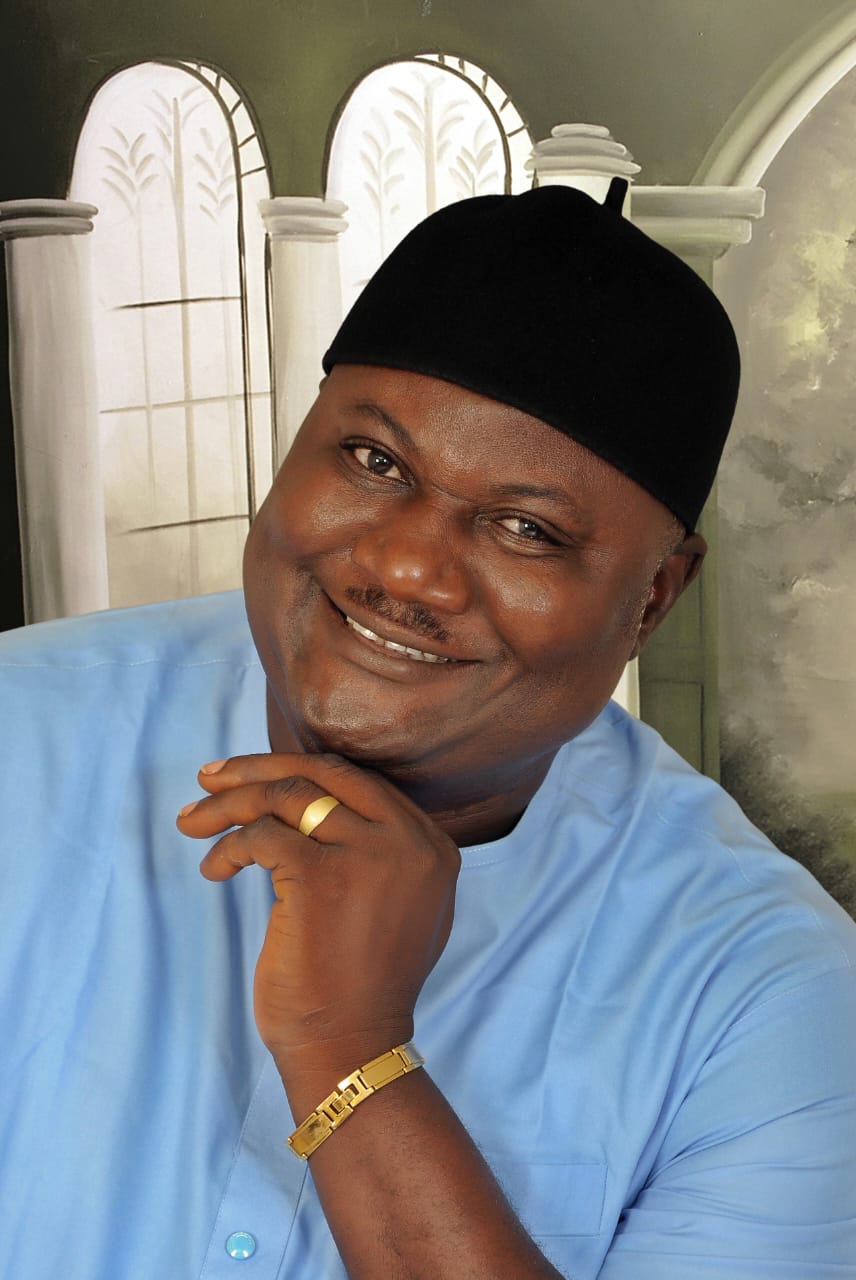
Akaba, who is contesting under the Labour Party, LP, described his ambition as a battle between David and Goliath during an interview with our correspondent in Lafia.
“This is a battle between David and Goliath. They are looking at me as nobody, a child of nobody. I agree, but I am carrying only a sling and a stone. When the time comes, we will hit Goliath on the 16th of January,” he said.
The aspirant, who hails from Tudu Gwandara Ward and is the son of retired Very Rev. Peter G. Akaba, an ERCC Trustee, said his contest is anchored on faith.
“I used to tell people jokingly that I’m contesting for the House of Representatives under the Book of Matthew, Matthew 18:20, which says, ‘Where two or three are gathered in my name, there am I in their midst.’ And that is confirmed in Romans 8:31 — If God is for us, who can be against us? So, God is with us. In every step I have taken, God is with me,” he said.
“The purpose of me contesting this position is not for my selfish interest. Leadership comes from God.”
Akaba lamented that the people of Lafia/Obi, particularly those in Obi, have been neglected and have not felt government presence at their doorsteps.
“When you look at the constituency, there are certain groups of people that have been neglected, not only in Obi, but also in Lafia. The electorate are not beneficiaries of government presence at their doorsteps,” he said.
He said God created the constituency with diverse ethnic groups for a purpose.
“I’m Koro by tribe. And when you look at Lafia/Obi Federal Constituency, you know God is not selfish in His creation. He brought Mada, He brought Alago, He brought Koro, He brought Kanuri, He brought Gwandara,” he noted.
He argued that for fairness, equity and justice, the seat must go to Obi, noting that the Koro people have consistently supported other ethnic groups.
“For fairness, equity and justice, Koro people have supported Alago. They have supported Gwandara. They have supported Eggon. They have supported Kanuri,” he said.
Tracing the political history of the constituency, Akaba recalled that in 1999, Suleiman Yusuf from Mararaba Ward contested with Obi support, followed by Alhaji Danladi Almakura from 2003 to 2011, Dr. Joseph Haruna Kigbu from 2011 to 2015, and Hon. Abubakar Sarki Dahiru who spent 12 years.
“Agwatashi produced a Senator, Solomon Adokwe, who spent 12 years as a sitting Senator. But Obi has not produced a House of Representatives member or a Senator for balancing,” he said.
“The sitting House of Representatives member, who is from Lafia, has even said that for fairness, equity and justice, the seat should shift to Obi Local Government since he is going for Senate. You cannot keep the Senate in Lafia and the House of Representatives in Lafia. This position has been in Lafia since 1999.
“Time has come for the House of Representatives seat to go to Obi, not Lafia again. People are now politically wise. Nobody would like to be marginalized, considering the voting strength,” he added.
He acknowledged other contestants from Obi, including Dalla of the PDP, Hon. Ogbele of the NDC, and Dr. Anzaku of the NNPP from Gidan Ausa, but insisted that Lafia should exercise patience.
On his agenda, Akaba unveiled a four-point blueprint: Agriculture, Education, Youth and Women Empowerment, and Infrastructure.
On Agriculture:
“My policy blueprint is a four-point agenda. Looking at Lafia/Obi Federal Constituency, most of the people are agrarian. So the first is agriculture. Our farmers cannot afford fertilizer. To even see it is a problem, let alone affording it.
“Herbicide is also a problem because the resources are not there. Even when these inputs come, they don’t come at the right time. I’m a professional farmer. I farm yam, rice, maize, beans, and groundnut. All these crops have their seasons. I know the period they need fertilizer, herbicide and tractors.
“I want to move Lafia/Obi from consumption to production. Presently, we consume more than we produce, and it is not enough because we don’t have government support,” he said.
On Education:
“Number two, when you go round our villages, all our schools are dilapidated. You will only see good schools along the roads. But just go to Fadama Bauna, to Dedere, to Agwata, to Adudu, all these villages, it’s as if there is no education. Go to Agyaragu, Musha, Takalafia and other surrounding areas, the primary schools are dilapidated, children sit on the floor.
“The generation that benefited from quality education and good governance are the ones spoiling the education sector today. During their time, they told us chickens were slaughtered for them, uniforms washed and ironed for them. What happened to those policies today?
“We must revive our educational sector so that the present generation and generations unborn can sit comfortably in their classrooms and learn,” he stated.
On Youth and Women Empowerment:
“The third is youth and women empowerment. We have talented youths, but their knowledge is being wasted. You will ask someone, ‘What is your qualification?’ He will say, ‘I have http://B.Sc. in Organic Chemistry, Microbiology, Sociology, Psychology,’ and all this knowledge is wasted. When you finish school for 15 to 20 years without a job, when will you get that job?
“I want to develop those talents through skill acquisition. I intend to sponsor a bill for the establishment of a Centre for Entrepreneurship in Agwatashi so that Lafia/Obi can be like China — when you finish school, you go there to acquire skills.
“Our children finish school and leave for Benin to ride Keke and Okada for daily pay just to feed and send money to their families.
“Likewise the women, those who are good in business, we can empower them through microfinance banks and cooperative societies instead of sitting idle,” he said.
On Infrastructure:
“The last one is infrastructure. When we talk about infrastructure, it comprises bridges, local bridges, drainages, culverts, hospitals and clinics. The worst is that clinics in our villages are not functioning. Staff will tell you they cannot stay in those structures.
“As a member of the National Assembly and being an Engineer — I am a Production Engineer — if given the opportunity, I will ensure people see dividends of democracy at their doorsteps.
“Most of what we call bridges are just culverts. They are not bridges. They are culverts. These are projects that N3.5 million, N4 million, N5 million can complete. For example, the bridges linking Kaba, Tumara, Gwade and Dudu Gwandara, will you call those bridges? They are not bridges. They are culverts.
“By the time we build these culverts, farmers can harvest their crops and move them to their homes and markets.
“Healthcare is very important. No matter how we beautify a society without functional clinics, no matter how we help people in agriculture, without a clinic and general hospital, where will they go if they have snakebite or if a woman goes into labour on the farm?”
