

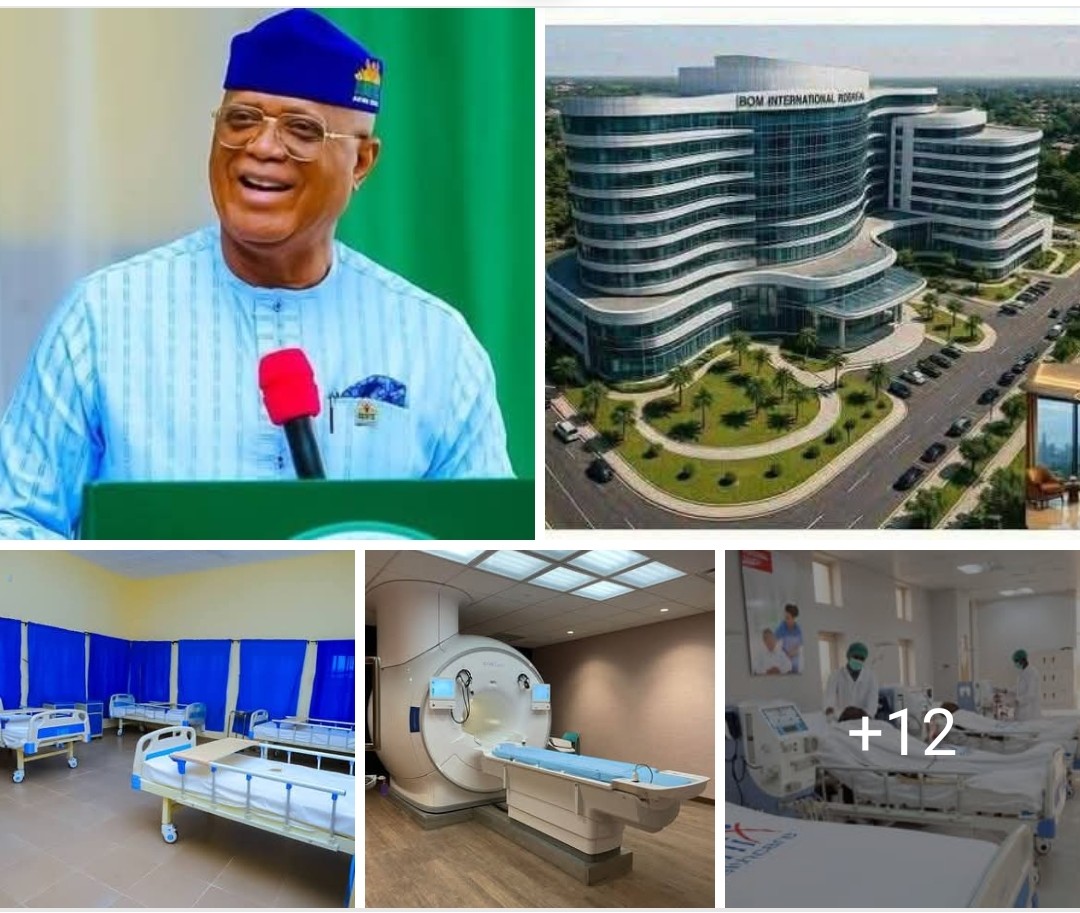
The Special Assistant to the Akwa Ibom State Governor on New Media, Venerable Richard Peters, has outlined what he described as the remarkable achievements of Governor Umo Eno in the health sector, saying the administration has transformed healthcare delivery through massive investments in infrastructure, workforce development and health insurance coverage.
Speaking during an interactive session with selected journalists in Abuja, Peters said Governor Eno’s administration has, within three years, expanded access to affordable and quality healthcare across Akwa Ibom State through strategic reforms designed to strengthen the entire health system.

Below are excerpts from the interview.
Interview
Question: Governor Umo Eno recently marked three years in office. How would you assess his performance in the healthcare sector?
Richard Peters:
Governor Umo Eno has made healthcare one of the top priorities of his administration because a healthy population is essential for sustainable development.
In the last three years, the government has invested significantly in healthcare infrastructure, human resources and social health programmes to ensure that residents, especially those in rural communities, have access to quality medical services.
Healthcare is no longer concentrated in urban centres alone. The administration is taking quality healthcare to the grassroots.
Question: What major healthcare projects have been undertaken so far?
Richard Peters:
One of the landmark achievements is the construction and commissioning of modern Primary Healthcare Centres (PHCs) across all the 31 Local Government Areas of Akwa Ibom State.
The objective is to provide accessible and affordable healthcare services close to where people live, reducing unnecessary travel to larger hospitals for basic medical care.
These PHCs are being equipped to deliver quality healthcare that meets modern standards.
Question: Beyond infrastructure, what has the government done to improve healthcare delivery?
Richard Peters:
Healthcare infrastructure alone cannot function effectively without qualified personnel.
That is why Governor Umo Eno approved the recruitment of 2,854 healthcare professionals, including doctors, nurses and other medical workers, to strengthen service delivery in public hospitals.
This has significantly improved manpower across the state’s health facilities.
Question: Health insurance remains a major concern in Nigeria. What progress has Akwa Ibom made?
Richard Peters:
The administration has recorded one of its biggest social intervention successes through the Akwa Ibom State Medical Insurance Scheme.
Today, over 200,000 residents have been enrolled in the programme.
This means thousands of vulnerable citizens can now access healthcare services without bearing the full financial burden of medical treatment.
The scheme is helping to reduce out-of-pocket healthcare expenses while improving access to essential medical services.
Question: There have been discussions about the Ibom Medical City project. What should residents expect?
Richard Peters:
Governor Umo Eno is implementing a comprehensive healthcare transformation strategy.
The administration is strengthening primary healthcare, upgrading general hospitals, expanding emergency medical services and establishing specialist healthcare centres.
One of the flagship projects is the 350-bed Ibom International Hospital, which will feature 24 specialised departments.
The facility is expected to provide world-class healthcare services, reduce medical referrals outside the state and position Akwa Ibom as a destination for medical tourism.
Question: Emergency healthcare is another critical area. What is the government’s approach?
Richard Peters:
Emergency response is receiving significant attention.
The government is deploying new ambulances under the Akwa Ibom State Emergency Medical Services and Ambulance System (AKISEMSAS) to improve emergency healthcare delivery.
General hospitals are also being equipped with modern medical equipment to ensure patients receive timely and quality treatment.
Question: What is the long-term vision behind these healthcare reforms?
Richard Peters:
Governor Umo Eno is building a healthcare system that works for everyone.
The reforms are designed to reduce pressure on tertiary hospitals by strengthening primary healthcare and improving referral systems.
Ultimately, the goal is to improve the quality of life of residents, reduce medical tourism outside the state and ensure that people receive quality healthcare within Akwa Ibom.
The governor believes governance should directly improve the lives of the people, and healthcare remains one of the strongest pillars of that vision.
